


S :Society
Establishment of a sustainable supply chain
Actions in Suratthani, Southern Thailand
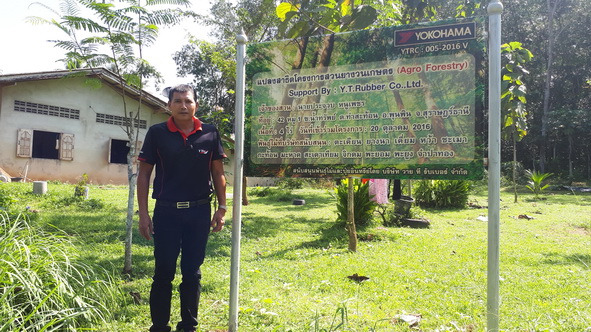
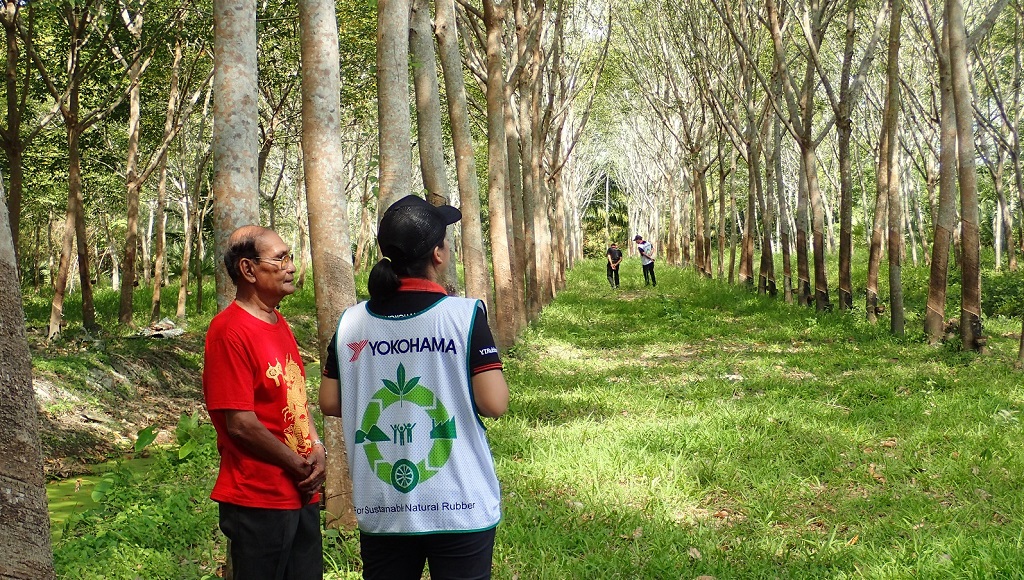
Why do we work in Suratthani?
Southern Thailand is now one of the centers of natural rubber production, accounting for 60% of the natural rubber produced in Thailand. Another reason why Suratthani is important to us is that we have Y.T. Rubber Co., Ltd. (hereinafter referred to as YTRC), a Yokohama Rubber subsidiary that processes natural rubber, located in the Suratthani province. In recent years, leaf blight disease has been found to spread among para rubber trees in the area, requiring countermeasures to be taken. This situation prompted Yokohama Rubber to start an initiative to improve sustainability of natural rubber production in Suratthani.
Starting a survey of natural rubber farms in Suratthani
Since June 2019, Yokohama Rubber has been actively engaging with natural rubber farmers in Surat Thani, Thailand, through monthly on-site interviews. After achieving its original goal of 500 surveys in 2023, the company set a new ambitious target of 1,200 farms by 2030. As of March 2026, the initiative has successfully covered 1,101 farms.
Having achieved our initial target of surveying 500 households, the survey continues to this day (988 households having been surveyed as of August 2025).
Not only the information we have gained through the survey, the communication and partnership we have developed with the local farmers through the survey activities has proved to be highly valuable. We are planning to continue these survey activities on an ongoing basis. As part of the survey, we identify the location of each farm and mark it on our map to confirm that none of the farms are located inside a natural park or other protected areas. We also check the number of years each farm has grown natural rubber trees and verify that they are validly registered to the Rubber Authority of Thailand (RAOT) to confirm that these farms have not been developed illegally or through deforestation. Regarding farm workforce management, we survey their work schedule, including the number of working hours per day and the number of workdays per period, whether they are subject to work quotas, whether they are free to quit their job when they want to, whether they receive health insurance, whether there are any children under 18 years old working on the farm, and how many people are working there, to confirm that these farms do not practice forced labor or child labor. To date, no illegal activity or practice has been found in the survey.
Furthermore, we have held hearings on the operational challenges faced by natural rubber plantations to identify their specific issues and areas requiring resolution. Yokohama Rubber will accumulate and analyze these survey data, utilizing the insights to support the sustainable management of natural rubber farmers and enhance traceability.
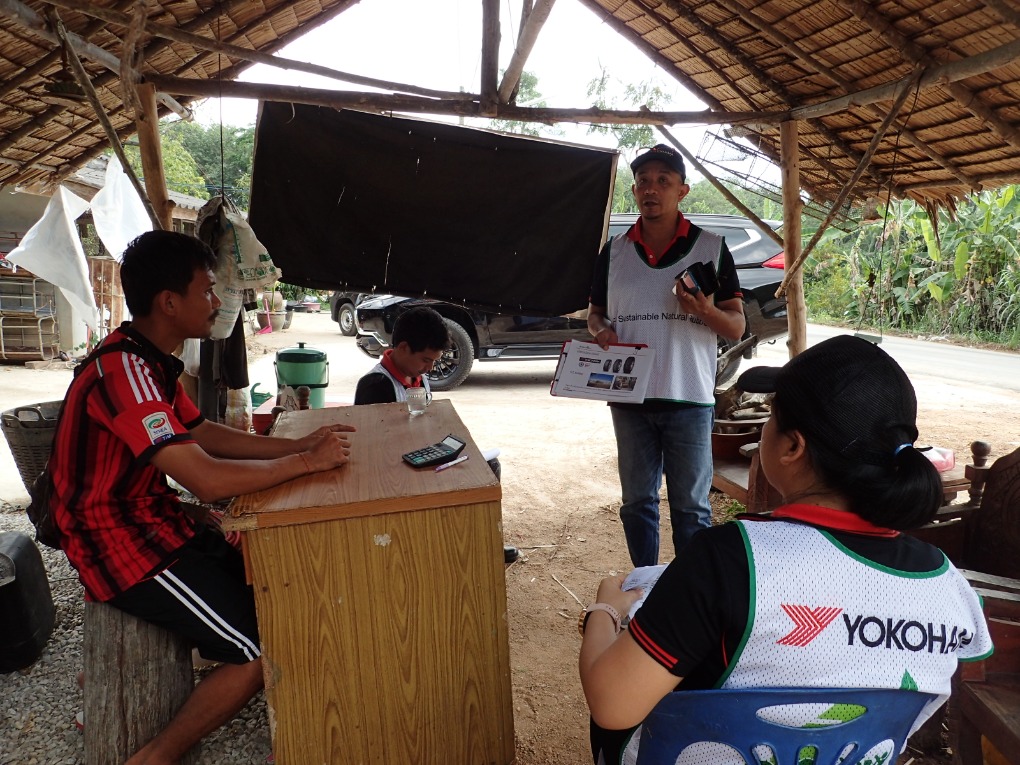
Farm survey in Southern Thailand
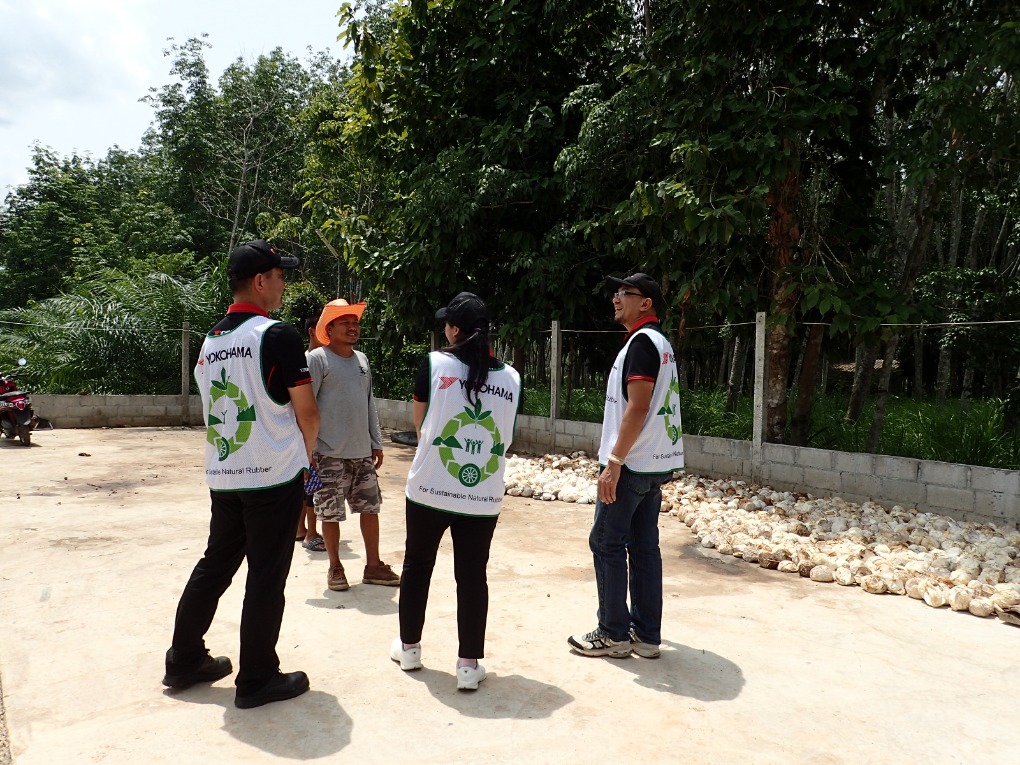
Farm survey in Southern Thailand
Seminar event jointly hosted with the Rubber Authority of Thailand (RAOT) to support local natural rubber farms and to accelerate quality improvement
In an effort to improve the transparency and soundness of our supply chain based on our Procurement Policy for Sustainable Natural Rubber, Yokohama Rubber signed a Memorandum of Understanding (MOU) with RAOT in January 2020 to collaboratively support the management of natural rubber farms and improve traceability of their product.
Based on this Memorandum of Understanding, starting in 2023, we partnered with the Rubber Authority of Thailand (RAOT) Suratthani Branch to hold a seminar event for Thai natural rubber farmers focused on improving rubber quality and productivity.
(Held biannually on an ongoing basis. Approximately 50 to 70 farmers participate each time). Participants receive 250kg of fertilizer per farm free of charge, utilizing the expertise of the Thai Natural Rubber Authority, allowing them to experience the fertilizer's effectiveness firsthand.
Furthermore, we are collecting natural rubber samples for a certain period from farmers who have agreed to participate in the verification of fertilization effects since June 2025, and analyzing the yield and quality. So far, we have found that fertilization increases the yield of natural rubber but does not affect its quality. This is consistent with the results of our literature review.

Scenes from the Natural Rubber Seminar

Farmers posing for a commemorative photo in front of the delivered fertilizer
Human Rights Due Diligence for Rubber Raw Material Suppliers in Thailand's Suratthani Region
In June 2024, we conducted hearings and on-site visits in Suratthani Province, Southern Thailand, focusing on the theme of "Working conditions of workers and environmental impact on nearby residents at rubber raw material suppliers." This was done in collaboration with the Japan Committee for the Economic Roundtable (CRT), a third-party organization.
In addition to stakeholders along the supply chain—such as plantation owners, workers employed on plantations, raw rubber brokers, and drivers responsible for transportation—CRT Japan Committee conducted interviews and field visits with a broad range of stakeholders, including local village chiefs, school principals, and hospital directors.
Furthermore, by conducting the hearing with only the third-party organization present and without any representatives from our group, we endeavored to elicit candid opinions from rights holders and stakeholders.
The results of this impact assessment did not reveal any significant issues that would negatively impact human rights, such as forced labor or child labor. However, it became clear that the relationship between farm owners and farm workers is close to a freelance contracting arrangement, with very few cases of formal labor contracts being concluded.
In addition, some farms employ live-in Myanmar workers who are in a vulnerable position due to the difficulty of returning to their home country given the situation there. It was recognized that their situation needs to be continuously monitored from the perspective of living wages and living conditions.
Based on these results, in the self-inspection following the impact assessment, we are focusing on investigating farms employing Myanmar workers and striving to understand and improve their working conditions. In addition, we are distributing Myanmar-language labor contract templates, created by YTRC under the advice of the Thai Department of Labor, to farm owners and encouraging them to conclude labor contracts.
Furthermore, in 2025, as a follow-up to these activities, a field survey was executed by a third-party organization, the Caux Round Table (CRT) Japan. The purpose of this survey was to reassess the situation and conduct follow-up interviews with natural rubber plantation owners and workers to confirm developments since the 2024 impact assessment. The findings revealed positive progress, including the formalization of written labor contracts and mindset transformations among both owners and workers driven by plantation seminars and other events. We remain committed to driving initiatives that mitigate risks at natural rubber plantations, focusing on working environments, the execution of labor contracts, economic foundations, human rights, and business continuity.

Interviews with Farm Workers

Interviews with Farm Owners
